Too Big to Innovate
It is well enough that people of the nation do not understand our banking and monetary system, for if they did, I believe there would be a revolution before tomorrow morning. — Henry Ford
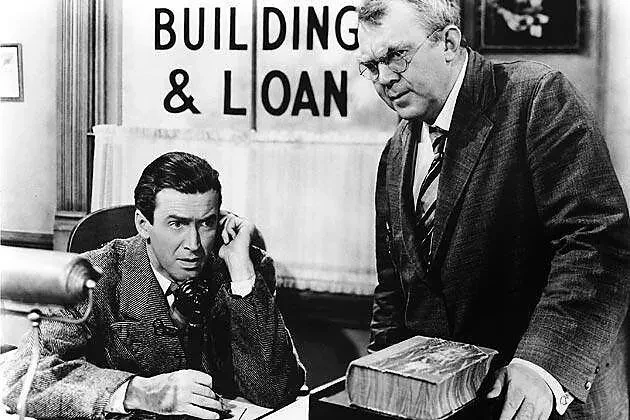
In the 1946 classic, It’s a Wonderful Life, George Bailey runs the Bailey Brothers Building and Loan. The most unbelievable part of the movie is not George’s second chance at life, or even the divine intervention of an angel, but the fact that the building and loan was a family run business. Today, George Bailey wouldn’t stand a chance against the litany of government regulations that require an army of thousands of lawyers to maintain compliance.
Innovations do not have a predefined form and are not restricted to certain industries. While the word “innovation” typically engenders images of flying cars, rocket ships, and high tech computers, it is not confined to these industries or even engineering fields for that matter. A mortgage is not something you would typically associate with the word innovation but it was just that. The creation of the mortgage was an innovation in the banking sector that allowed individuals and families to purchase homes that would have otherwise been well beyond their means. The invention of the mortgage allowed individuals to build wealth through their homes, while extending the duration of their payments to accommodate their income levels.
Despite the consternation of those who criticize shifty bankers for simply “moving money around,” the creation and trade of stocks, bonds, options, derivatives and other financial instruments have been similar innovations in banking. The movement and transformation of resources is what all industries invariably do, businesses all over the world simply move resources around. The key however, is that they convert and transport resources from less valuable forms and places into more valuable ones. The same is true with the movement of money through an economy. The banking sector has arguably one of the most important roles in the economy and the process of technological innovation. The allocation, direction, and investment of dollars into businesses and new technologies is critical to the advancement of technology. Unfortunately, as we will see in this section, the invasiveness of government into the banking sector has caused stagnation and regression. Government regulation across the industry restricts the way in which banks are allowed to operate, while federal policies actively divert funds away from market desired goals towards political ones.
Regulation and policies on banking
In the United States, market dynamics are often shaped by a complex interplay of government interventions. The government enacts numerous laws, adjusts incentives, regulates sectors, modifies standards, reallocates capital, and creates moral hazards. In response, individuals and companies adapt to these evolving incentives and constraints in ways that frequently diverge from the original policy intentions, resulting in unintended negative consequences. Subsequently, these outcomes are cited as market failures, prompting calls for increased oversight and regulation.
This process has played out many times over, from the Great Depression to the more recent financial crisis of 2008. The subprime mortgage crisis did not appear out of nowhere, it started decades before 2008 with the explicit government policy of increasing home ownership. The problems can be traced all the way back to the Community Reinvestment Act in 1977, which began evaluating banks based on who they lent to. From the Federal Reserve’s website it says, “The Community Reinvestment Act, requires the Federal Reserve and other federal banking regulators to encourage financial institutions to help meet the credit needs of the communities in which they do business, including low---and moderate-income neighborhoods.” Starting in 1993, the Department of Housing and Urban Development (HUD) began bringing legal action against banks based on the demographic composition of their borrowers, which prompted lenders to lower standards in order to avoid legal action. Beginning in 1996 HUD set explicit goals for home ownership by targeting the percent of mortgages that went to low income families, starting at 40% and reaching 52% by 2005. These policies were carried out by government-sponsored enterprises (GSEs) like Fannie Mae and Freddie Mac, who were required to purchase a certain percentage of “special affordable” mortgages. Finally, the American Dream Downpayment Act of 2002 would increase home ownership by, “providing a dedicated stream of funding to cover the upfront costs of buying a home.”
All of these programs and policies, regardless of their intentions, came with economic consequences. As Thomas Sowell summarized, “it is necessary to be clear that this was not a matter of regulatory agencies permitting lower mortgage lending standards but of those federal agencies requiring lower standards, in order to meet politically defined goals.” (Emphasis original)
This section is not about relitigating the causes of the financial crisis, we know that the banks, borrowers, brokers, and credit rating agencies were not without fault. However, the purpose is to show that government action alters incentives which creates unintended consequences. Those consequences often manifest themselves in the diversion of resources. To be clear, government regulations and policies in banking demanded politically defined outcomes. Those regulations and policies incentivized banks to lend to riskier clients, in the name of increasing home ownership. As a result, there were economic consequences that occurred in response to those changing incentives. Median house prices, adjusted for inflation, barely changed between the late 1970s and early 1990s. It was not until the mid 1990s and early 2000s, when the effects of the government policies had propagated through the economy, that resources in the form of dollars became increasingly diverted to real estate. Money that would have otherwise gone to productive use in companies building new innovative products was instead invested into speculative real estate.
Since the Great Recession of 2008 the creation of new banks in the United States has flatlined. The Dodd–Frank Wall Street Reform and Consumer Protection Act of 2010 created a new set of regulatory measures for the banking industry. The Act created new agencies and councils to monitor various aspects of banking and finance.1 Some notable aspects were raising capital requirements, increasing compliance costs, and restrictions on what banks are allowed to invest in. If you set out to create the Big Bank Protection Act, in order to shield large banks from any new competitors, it would look eerily similar. The barriers to entry in banking have been dramatically increased because of Dodd-Frank.
New bank charters
Charters per year
The Dodd-Frank Act made it nearly impossible to create a new bank and despite the initial concern over institutions being “too big to fail,” since the act was passed the effect has been to make the existing banks larger and more prone to failure. In 2023, three of the four largest bank failures of all time occurred (First Republic Bank, Silicon Valley Bank, and Signature Bank). All the agencies and offices created in 2010, along with the billions of dollars allocated to them did not prevent the failure of these three banks.
The American banking system has become so heavily regulated that creating a new bank is nearly impossible. Even if one succeeds in establishing a new bank, differentiating it from existing institutions presents a significant challenge. Issuing an independent currency is illegal, and investing a bank’s assets in innovative ways is deemed too risky and is also prohibited by law. As government intervention in the banking sector has increased, innovation has correspondingly diminished. Consequently, the only innovations related to banking have emerged through digital services, such as payment apps like PayPal and Venmo, and various mobile applications that facilitate check deposits and money transfers.
A vibrant and innovative economy necessitates a dynamic banking sector to efficiently allocate capital, optimize loans, enhance the currency’s value, and make intelligent investments. Currently, our banking sector fails to fulfill these essential functions.
The control of money
The distribution and circulation of money is a critical aspect of a market economy. Money allows us to trade our labor for goods and services via a common medium of exchange. In a market economy, prices convey information and determine the allocation of resources across space. When building a factory, the prices of construction materials like lumber, steel, and concrete provide valuable information and allow individuals to compare viable alternatives without knowledge of the complicated process that produced them. A significant increase in the price of lumber may indicate a supply shortage, prompting adjustments in lumber purchases or the consideration of alternative materials to maintain cost efficiency. Consequently, the cost of lumber will determine where geographically the lumber is to be allocated. Prices are critical in efficiently allocating resources to their most needed and productive applications.
In the United States, many Americans possess a fundamental understanding that price controls are ineffective. Historical experiences, such as the rationing and black markets resulting from the Office of Price Administration (OPA) during World War II and the long gas lines of the 1970s caused by the Nixon administration’s price controls, serve as vivid reminders. Additionally, the extensive price-fixing regime in the Soviet Union has cemented a desire to avoid similar economic strategies. This understanding vanishes when it comes to interest rates. These rates, however, are simply another form of price—the price of borrowing money.
Just as prices regulate the distribution of resources across space, interest rates determine the allocation of financial resources across time. Low interest rates suggest that money in the future holds no more value than money in the present, thereby reducing the cost of borrowing from the future to fund present needs. Conversely, high interest rates indicate that future money is significantly more valuable than present money, effectively encouraging the deferral of resource use from the present to the future. The artificial manipulation of interest rates can have adverse consequences, akin to the central control of regular prices. This manipulation can disrupt resource allocation, leading to inefficiencies and economic distortions.
Understanding the role of prices and interest rates in the process of production and innovation is essential. These values provide critical information for decision making regarding alternative investments, but their efficacy depends on their accuracy and freedom from arbitrary manipulation. When the government artificially alters the price of materials or changes interest rates, it creates cascading effects on consumer and business spending. For instance, a company deciding whether to invest in new research technology will make different decisions under varying interest rate conditions. Low interest rates make borrowing inexpensive, encouraging the company to take out large loans for speculative research projects. Conversely, high interest rates make borrowing costly, prompting the company to focus on safer projects with more predictable returns to ensure they can repay the loan.
At first glance, it would appear that perpetually low interest rates would be beneficial for innovation. The cheap loans would fuel scientific research and investments in technological advancements. However, artificially low rates often incentivize riskier investments, shifting the focus from long term projects to speculative short term bets. A perfect example of this occurred in the early 2000s, as low interest rates fueled the rise of the housing bubble prior to 2008. Money that otherwise might have gone to investments in research were diverted to speculative California housing. On the other hand, prohibitively high rates deter borrowing altogether, as few investments could generate sufficient returns to cover the high loan payments. So if rates shouldn’t be too high or too low, how should they be set?
The key point is that determining the ideal interest rate cannot be precisely known or set by any single entity. Such a rate can only be determined through the interactions of millions of competing actors in the market; just as the price of regular goods is determined through a market with millions of complex processes. Thus, both prices and interest rates must be allowed to fluctuate based on market dynamics to ensure the efficient allocation of resources. Market based pricing is essential for the free flow of information that will be used to build factories and research innovative products.
The economists at the Federal Reserve are not omnipotent oracles capable of seeing the future. Despite the terabytes of economic data and thousands of brilliant economists, the Federal Reserve cannot effectively set interest rates any more than we can control the weather. There is a fundamental knowledge problem that exists when engaging in these activities. Consider the analogy given by the economic writer, James Grant:
The National Weather Service spends over a billion dollars a year and takes tens of millions, if not billions, of discrete observations of wind, weather, tide, temperature, what have you [...] yet our forecasting ability goes out, maximum, ten days. Even so, the economists think nothing of calling next year’s GDP.
The economy is far more complex yet the Federal Reserve Board and the members of government agencies claim to know with precision the optimal interest rate and correct regulations. This process is unscientific and harmful to the economy and technological progress. The process of innovation relies on the acute financial allocation of resources to new products and technologies. When the prices and interest rates that govern this allocation mechanism are obfuscated, it corrupts the process of innovation by diverting physical and financial resources to inefficient ends. To prevent such outcomes, it is crucial to acknowledge the limitations and the extent of the government’s effectiveness.
Purchasing power of $1
January 1913 dollars
Recreated from monthly CPI-U: January 1913 CPI ÷ current CPI. January 1913 = $1; shown through 2023.
The failure to recognize these limitations can be seen in the fall of the dollars purchasing power over time. Since the creation of the Federal Reserve, both the supply and the price (i.e. interest rate) of money have been centrally controlled and the results have been disastrous. From 1913, the year the Federal Reserve was created, the dollar has lost more than 96% of its value. In order to purchase the same amount of goods that were sold for one dollar in 1913 would require $32 today. This has significantly deteriorated people’s ability to save and accumulate wealth, any money that was saved from decades past is almost worthless because of the drastic fall in the dollar’s purchasing power. This directly relates to falling living standards and the decreasing affordability of homes as people’s savings are taken from them over time. It also has cascading effects on the investments in technology.
In a technologically progressing society, we would expect the opposite of the purchasing power figure. The currency should get more valuable over time as more goods and services are available at lower prices, due to ongoing innovation and increased efficiency. The fact that this has not happened is a direct result of the central control of the money supply.
The flow of dollars through the economy is significantly influenced by governmental interventions in the United States. Government control, whether through direct public operation, regulation, or government-sponsored enterprises, enables the manipulation of incentives within sectors. This manipulation negatively impacts prices, the overall economy, and future innovation by distorting market dynamics. The stringent regulation of American banks has stifled the remaining dynamism in the industry. With exclusive control over the currency, the government’s unchecked money supply expansion fuels price inflation and erodes purchasing power. Moreover, the combination of money printing and artificial interest rates distorts investment strategies and long-term planning. These factors shift focus from sustainable technological investments to short-term speculative ventures that result in unsustainable bubbles. Consequently, the corrupted investment environment hampers the flow of capital to viable, innovative ventures, exacerbating stagnation across multiple industries.
Revitalizing the banking sector necessitates reducing governmental intervention. It is crucial to acknowledge the economy’s complexity; despite the expertise within the Federal Reserve, accurately determining interest rates will remain elusive. Any such attempts perpetuate distortions within the innovative market forces. An essential step forward involves fostering a dynamic and innovative banking sector capable of allocating capital based on genuine supply-demand dynamics. This approach is vital to advancing our industries and reigniting innovation.
This article has been adapted from the book Back to the Future: How to Reignite American Innovation.
Notes
The Dodd-Frank Act created the following administrative agencies and offices: Financial Stability Oversight Council (FSOC), Office of Financial Research (OFR) Investor Advisory Committee (IAC), Research and Analysis Center, Financial Research Fund (FRF), Orderly Liquidation Authority (OIA), Orderly Liquidation Fund (OLF), Office of Financial Education (OFE), Office of Service Affairs, Office of Financial Protection for Older Americans, Consumer Advisory Board, Private Education Loan Ombudsman. Imagine Peter Bailey trying to navigate through that alphabet soup.